
We are now over halfway through this year's legislative session. Here are some of highlights of what I've been working, including a number of omnibus policy bills that have passed through the Minnesota Senate.
Higher Education Omnibus Policy Bill Passed in the Senate
Yesterday, the Senate has passed SF4003, which is now serving as the Higher Education Omnibus Policy bill. It will now go to conference committee. This bill is the culmination of much of the work done in the Higher Education Committee this session. Some of the highlights of the package include language introduced to reduce barriers to transcript access for incarcerated students, the establishment of a bill of rights for pregnant and parenting students, codification of rights of students with disabilities, a prohibition on legacy admissions in Minnesota, an update for sexual violence prevention polices on campuses, and guardrails on online program management companies that contract with public institutions. With the historical investments we've made in Minnesota, these changes will ensure that the benefits of these investments are distributed equitably, and that all of our students are offered a safe and high quality education.
Other Omnibus Policy Bills Passed Through the Senate
Landlord and Tenant Policy: This bill (SF3492) addresses several issues in the current law regarding landlord and tenant policy. Some of the highlights of this bill include establishing a tenants right to organize, providing tenants with remedies when delays prevent a tenant from moving into a unit by the date promised by the landlord, and clarifying the rights of tenants who are victims of domestic abuse, sexual abuse, harassment, or are seeking assistance due to a mental health crisis. The bill also prevents landlords from denying a rental application due to a tenant providing an individual taxpayer identification number. Education: SF3567 is the Education Policy Omnibus bill. This is an extensive bill that has ten sections addressing different issues. Some of highlights of the bill include requiring school districts to adopt a language access plan that provides effective language assistance to students and adults who communicate in a language other than English, increasing freedoms of student journalists, and preventing public schools from implementing book bans.
Jobs and Economic Development: SF4027 addresses issues in eight different areas relating to jobs and economic development. These areas are dislocated workers, the Job Creation Fund, the Innovative Business Development Public Infrastructure Grant Program, the Energy Transition Advisory Committee, other technical changes, small business program modifications, independent living services, and public facilities authority.
Agriculture: This bill (SF4225) addresses a significant number of issues in current agriculture policy and also updates pesticide control policy. Some of the policy provisions in this bill include updating compensation for damage caused by elk, prohibiting confidentiality clauses in agricultural production contracts, and creating a new section of statute describing procedures for what a person should do if a person finds an animal that has escaped from its owner. Human Services: SF4399 is serving as the Human Services Omnibus Policy bill. Among the many provisions in the bill, there are measures to address disability care staff shortages by altering qualifications, modernizing definitions to various disabilities, ensuring all people living under assisted care have access to advocacy and legal services, and expanding acceptable sources of credentials to work in a substance use disorder facility.
Homeless Day on the Hill
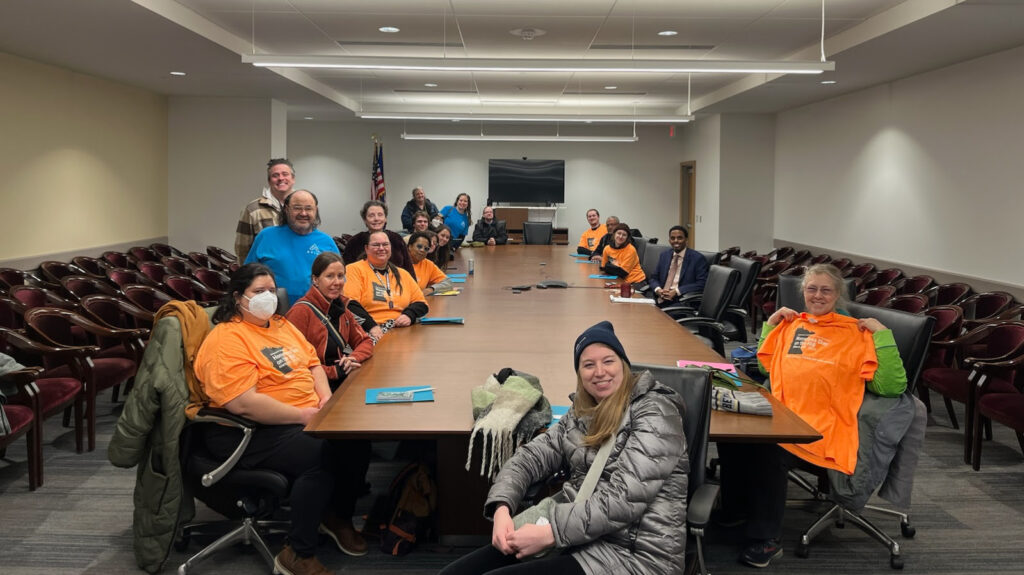
On March 20th, we celebrated the Homeless Day on the Hill, where over 900 members of the Minnesota Coalition for the Homeless came to advocate for the rights of the unhoused. Last year the Minnesota Legislature made historic investments equaling 2.1 billion dollars towards housing and preventing homelessness. This included funding shelter spaces and operations, emergency service programs, family homelessness prevention, housing infrastructure, and rehabilitating existing public housing.
The two central pieces of legislation advocates came to voice support for this year were the Bridge to Shelter Act (SF4018) and the Constitutional Amendment for Housing (SF4022). SF4018 establishes a five year program to invest 60 million annually to cover gaps left by existing homelessness prevention programs. SF4022 puts a constitutional amendment on the 2024 ballot, creating three funds to help address the current housing crisis. These funds are the Homeownership Fund, the Rental Opportunity fund, and the Household & Community Stability Fund. Funding would be raised by increasing the sales tax rate by three-eighths of one percent. I am proud to support both of these pieces of legislation. Other priorities for the year include furthering investments made in the previous session, expanding income protections, and eliminating background studies for housing support employees.
Update on Human Services
Recently I presented SF4174 to the Committee, alongside Chikio Richmond from the Residential Providers Association of Minnesota. This bill appropriates $350,000 from the general fund for a grant to the Center for Excellence in Long Term Care. The grant would be used to fund a culturally specific outreach and education campaign toward existing customized living providers that are currently licensed as assisted living facilities, but would better serve as home and community based service providers. This would assist many BIPOC owned small care providers who have been missing from conversations surrounding this issue in the past. This bill is important for advancing equity in care.
Additionally, I presented both SF1009 and SF5203. Both bills focus on addressing issues in community care. SF1009 relates to accessibility of Integrated Community Support (ICS) in multifamily properties. It allows multiple providers to operate in the same building with specific commissioner review, and providing units intended for ICS do not make up more than 25% of total units in the complex. It also sets a minimum of 2 units in a building where ICS is provided. SF5203 establishes a study of reimbursement rates for community first services and PCA (personal care assistance) workers. This essentially boils down to the work being shown when calculations are made when ensuring that reimbursement rates are met during collective bargaining stage between the state and providers.
Update From the Higher Education Committee
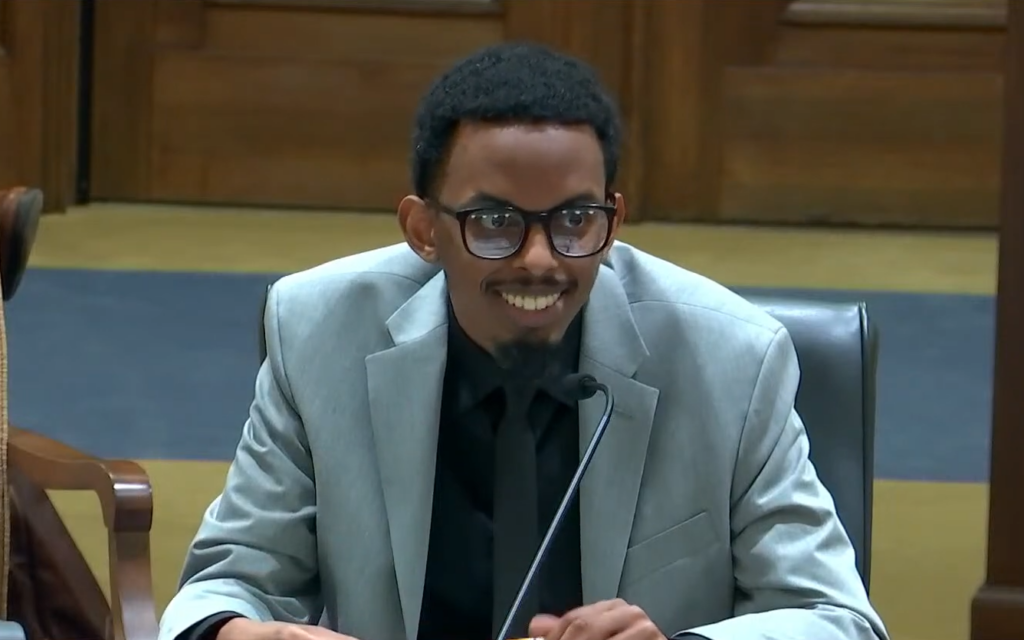
Additionally, the Higher Education Committee heard SF4107. This bill strengthens the Increase Teachers of Color Act (ITCA) by establishing the Aspiring Minnesota Teachers of Color Scholarship Program as a permanent one. The purpose of this program is to close opportunity gaps to recruit, prepare, employ and retain increased percentages of BIPOC teachers who more closely reflect students in Minnesota’s schools.
Defending the Minneapolis 2040 Plan and Fighting for Affordable Housing
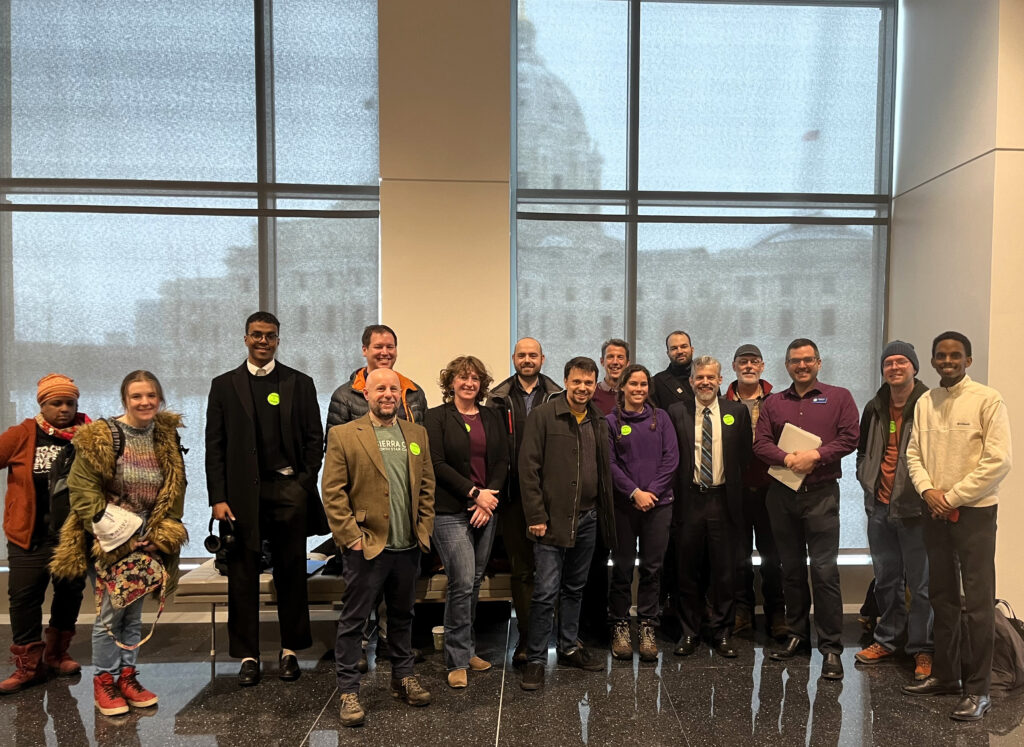
Recently I presented SF4183 to the Senate Committee on State and Local Government and Veterans. The purpose of this bill is to defend the Minnesota Environmental Rights Act (MERA) from misuse. It is being championed by a broad coalition of labor unions, housing affordability advocates, and over a dozen environmental organizations such as the Sierra Club, MN350, and the Land Stewardship Project, and they came down to the Capitol to show their support.
The context of this bill is that the Minneapolis 2040 Comprehensive Plan has been halted due a lawsuit. The 2040 plan is landmark accomplishment that has been recognized across the country for reducing housing costs and reducing carbon pollution by enabling more people to live in the central city. But due to this lawsuit, it has been halted in its tracks. Projects that were already far along in the building process, and that have spent tens of thousands of dollars, were abruptly cancelled and left in limbo. Thousands of homes that could be housing people have been cancelled. The cancellation of those homes is bad for both housing affordability and for our environment. When we don't build enough housing in the central city, that pushes people to move out to the suburbs, where they have to drive much longer distances, and where they are sprawling out into farmland and natural habitats that we should instead be striving to preserve.
Supporting Red Lake Nation College
Alongside President of Red Lake Nation College Chief Dan King, I presented SF4380 before the Senate Committee on Taxes. This bill allows for a property tax exemption to Red Lake Nation College in Minneapolis. Last session, the Minnesota State Legislature allocated three million dollars to help fund their higher education and job training programs. Red Lake Nation College provides an excellent opportunity to pursue higher education for Native Americans in Minnesota. This bill would further assist their project by alleviating their property tax burden and enable them to use the funds to focus on their higher education and job training programs. The bill is supported by the city of Minneapolis and Hennepin County.
Championing the Shared Ownership Business Model
Along with Electra Skrydlewski, the director of ownership for the Metropolitan Consortium of Community Developers (MCCD), I presented SF4182 before the Senate Committee on Jobs and Economic Development. Last session, the legislature established the community wealth building grant program as a pilot with MCCD administering a three million dollar loan fund. By establishing a program dedicated to supporting shared ownership businesses, we can provide solutions to some of our state's looming economic question. Shared ownership models can create ownership opportunities for communities that don't have access to traditional financing mechanisms or generational wealth. They also help prevent displacement, revitalize tax bases, preserve affordability, grow and retain businesses and jobs, provide a path for baby boomers to sell businesses to their employees, and strengthen local economies. This bill makes small changes to the program. This includes adding in a forgivable loan requirement of up to 15% for eligible borrowers, allowing the program to offer fee-based lending, and request a small one time appropriation of $350,000 to support the necessary outreach, education, and training to support the long-term success of the program.