
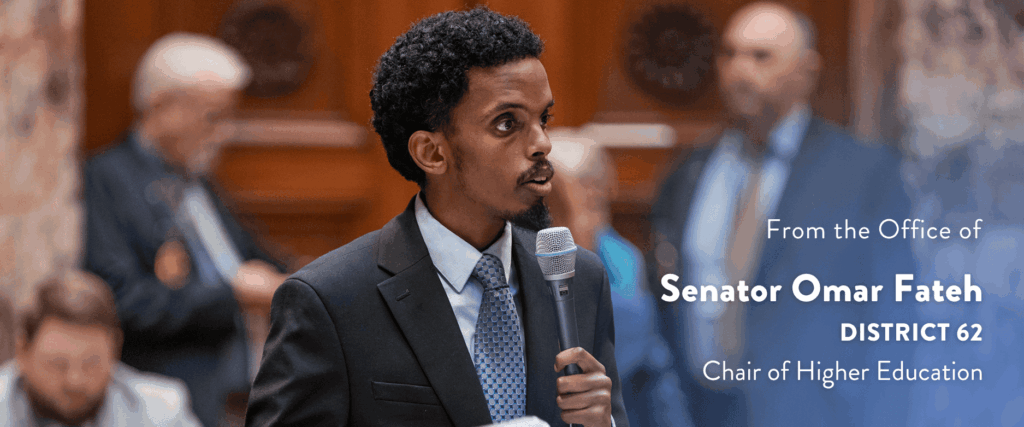
Dear Neighbor,
Over the past few weeks, we have been focused on the critical issues of public safety and gun control, with intense debate as our Republican colleagues continuously prioritize ownership of destructive weapons over the well-being of Minnesota families and children. Despite all the noise, we have had major wins - passing Senator Mohamed's Gun Violence Prevention package, Small Business relief for the impacts of Metro Surge, and critical consumer protection provisions. This legislation still faces challenges before final adoption, as GOP leadership in the House of Representatives remains at-odds with the working people of Minnesota.
Our Comprehensive Proposal to Prevent Gun Violence
On Monday, the Senate DFL passed a comprehensive gun violence prevention package to protect our students, our schools, and our communities. Monday’s bill included a ban on future sales of assault weapons and high-capacity magazines, increased school safety aid, and more funding for mental health access.
Following the Annunciation shooting last summer, Senate DFLers convened a bipartisan working group with DFL and Republican members that sought to find common-ground on evidence-based policies that could be passed to prevent gun violence. After several open, public meetings, consensus could not be reached on a final package, but Senate DFLers continued to work.
The bill that passed Monday represents a comprehensive package that addresses gun violence from all angles. We know that there is no solution to this crisis, but together this bill will make a difference. Monday’s bill passed on a party line vote, and now awaits action in the evenly divided House of Representatives. Minnesotans are asking for leadership from their elected officials on gun violence, and they broadly support these measures.
We hope that our House Republican colleagues join us in taking action and getting this done, but so far Speaker Demuth refuses to hear the bill and take action to protect our students.

Responding to the Harm Caused by the One Big Republican Bill
The Senate DFL passed a critical bill to protect Minnesotans from the worst aspects of the “One Big Republican Bill,” HR1. Almost every part of HR1 raises costs for Minnesotans, from food to health care. Here’s what we did to hold off those impacts:
Stabilizing Hospitals and Saving HCMC
Hennepin Healthcare (HCMC) is the only Level 1 trauma center in the upper Midwest and provides essential care to thousands of Minnesotans, but because of federal budget cuts, it’s at risk of closure. Our bill makes critical investments that will stabilize hospitals across the state, protect access to care, and prevent the catastrophic closure of Hennepin Healthcare.
- $150 million: Funding to keep Hennepin Healthcare's doors open
- $114.8 million: Hospital Stabilization grants for statewide support
- $17.6 million: Community Safety Net Providers
- $15 million: Rural EMS Uncompensated Care networks
Fighting Food Insecurity
Republicans in Congress are cutting SNAP benefits in our state by $135 million while one in five Minnesotans rely on food shelves to feed their families, and grocery prices keep going up. This bill invests in food shelves, food banks, and county support to hold back a worsening hunger crisis.
- $5 million to regional food banks
- $2.7 million in support for local food shelf programs
- $2.5 million for Prepared Meals Food Relief grant program for people with limited mobility, disability, or limited resources.
Modernizing Technology for County Services
The One Big Republican Bill cut funds to local governments and made it more complicated for county staff to help Minnesotans at the same time. On top of that, counties are still using programs from 1989 — 37 years old! This bill invests in long-overdue IT upgrades so Minnesotans can access services efficiently.
- 1989: The year counties first start utilizing a software program called MAXIS, which their employees still use today.
- 2,000: County workers who use MAXIS and other services programs every day.
Counties are on the frontlines of implementing new federal red tape. The One Big Republican Bill adds administrative burdens, increases the frequency of renewal paperwork, and makes public programs needlessly more complex. Our counties cannot meet the needs of Minnesotans while shouldering new administrative burdens and having their budgets cut at the same time.
This bill advances a state-county steering committee to advance the modernization of our IT and take advantage of work already being done.
Supplemental Budget Creates Funding for State Grant
On Tuesday, the Senate passed a bipartisan supplemental budget bill, SF4059, which combined a number of one-time and ongoing funding changes that have arisen this year. Though we passed a balanced budget in 2025, this supplemental budget makes targeted investments in a range of issues – from Higher Education, Energy, to Jobs and Economic Development – that are necessary for this year.
Article 2 of SF4059 appropriates $52M from the general fund to backfill the deficit in our state grant program. As chair of the Higher Education Committee, I have been working hard to find the $131M needed to provide our students with the benefits that were promised by the state. While this appropriation is only a fraction of the missing funds, it is a step forward to reduce the impacts of rationing on Minnesota students.
The supplemental budget is the latest piece of significant legislation we have passed that now awaits action in the House of Representatives. With less than two weeks left until the end of the Legislative Session, we are waiting for the House to take action on this and other items like a Tax bill and a bipartisan Bonding bill that Minnesotans are asking for.
Economic Recovery for Small Businesses
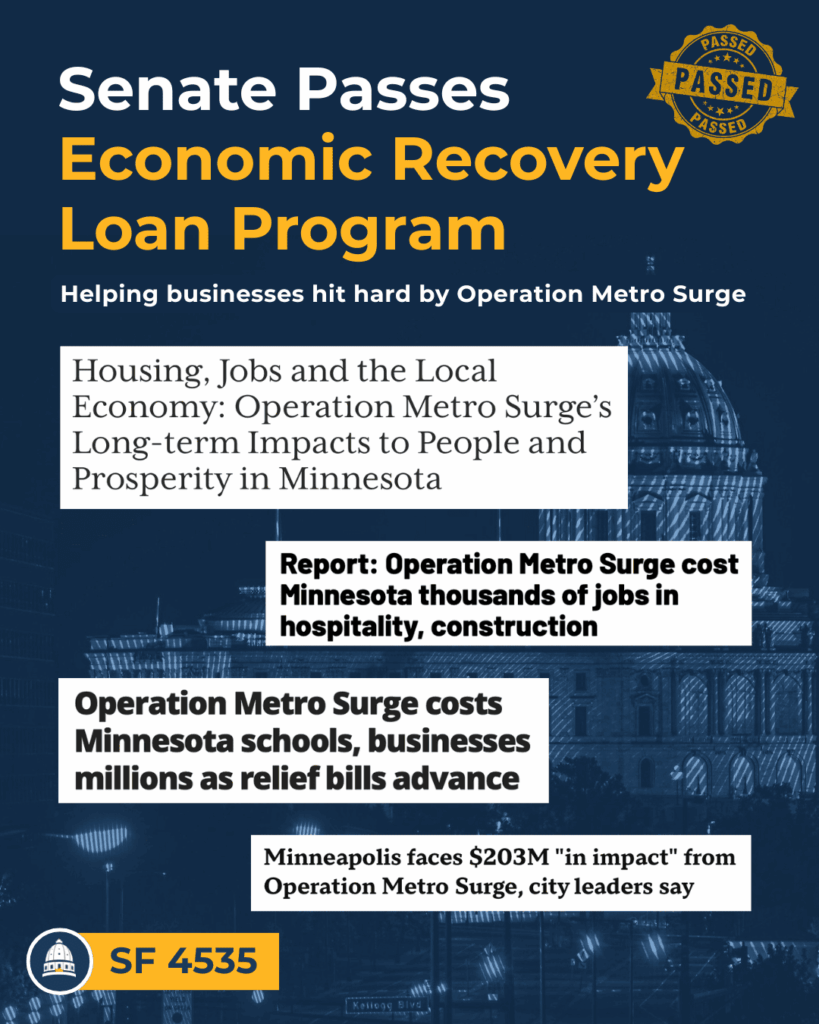
The Senate passed an economic recovery package for business owners who suffered devastating financial and job losses during Operation Metro Surge. The loan package includes $100 million in forgivable, 0% interest loans for businesses across the state.
To be considered, businesses must demonstrate a loss of revenue of 30 percent or more directly linked to federal immigration actions that occurred in communities around the state after December 1, 2025. Loans will be forgiven after two years for businesses that keep their loans current.
Stopping AI "Nudification" Technology
On Wednesday, the Senate passed a bill that bans access to AI nudification technology, 65-0. It will require that companies turn off access to AI “nudification” technology that allows people to create hyper-realistic nude images and videos of anyone if they have a photo of them. Since Senator Erin Maye Quade brought the bill forward in 2025, there have been several cases of people using this technology — in Minnesota and nationally — to create child sexual abuse material and nonconsensual pornographic imagery of adults.
Now, companies will be fined if they allow access to this technology in Minnesota, preventing image-based sexual abuse before it can begin. Penalties will help fund state crime victim services.
Senate Passes Consumer Protection Package
This week we passed a bill that protects Minnesotans from rising prescription drug costs, safeguards against misuse of emerging technologies, and strengthening consumer protections in everyday life.
Holding Big Pharma accountable and bringing down costs
We passed key provisions to hold pharmaceutical companies accountable and protect access to affordable medications.
- Protects access to affordable medications for patients and safety-net providers by enforcing drug pricing protections.
- Bans direct-to-consumer TV advertising of prescription drugs to curb unnecessary demand that drives up drug costs.
Strengthening protections against misuse of AI and emerging technologies
Recognizing the growing risks and harms posed by misuse of artificial intelligence and other emerging technologies, we took decisive action to protect Minnesotans from scams, fraud, and digital exploitation. As technology continues to evolve rapidly, our protections must keep pace.
- Limits the use of AI in utilization review denials by health insurers when evaluating medical necessity of health care services.
- Prohibit companies from allowing minors to use chatbots, requiring age verification and enforcement, to help guard against these addictive technologies that can lead to harmful interactions and impacts to mental health.
- Bans cryptocurrency kiosks used primarily to scam seniors.
Helping families streamline remediation, after experiences of the Hortman family
On Tuesday, we passed two bills brought to the legislature by Colin Hortman, son of Melissa and Mark Hortman. In the aftermath of the tragedies that occurred on June 14th, 2025, the Hortman children’s lives changed forever. While dealing with their grief, they had to handle the remediation of their parents’ home. However, the chemical irritants deployed into the house by law enforcement were extremely difficult to identify. It wasn’t until eight months after June 14th, that the Hortman children were able to fully remediate their parents' home.
We passed two bills, one to ensure law enforcement leave notice of chemical irritants used in buildings so owners know how to remediate, and another to ensure homeowner’s insurance covers the cost of remediation.
Constituent Corner
One of my favorite parts about my job is meeting with constituents. If you are ever at the Capitol, please stop by!

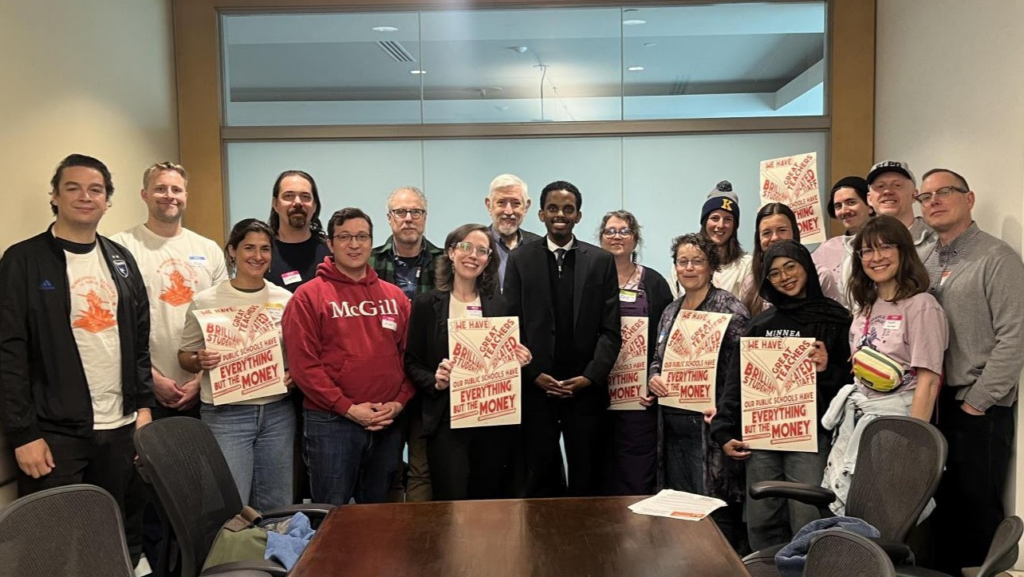
On May 6th I met with Minnesota Families for Public Schools to discuss protecting our students and securing new revenue to fix the school funding crisis. I am excited to be the first Minneapolis legislator to sign the Public Schools Champion Pledge.
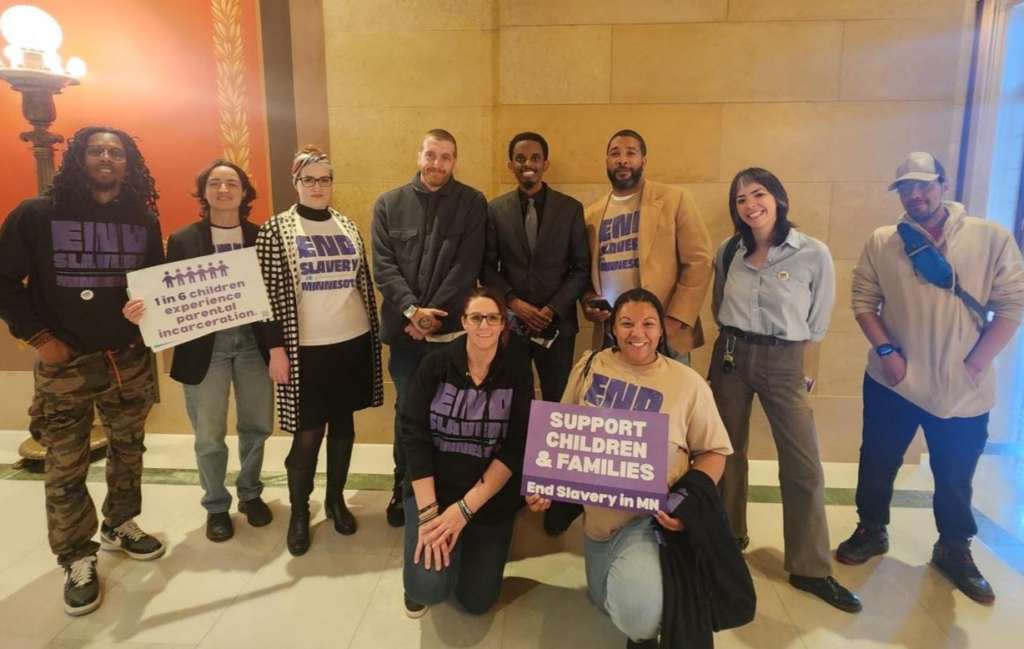
[Above] This week I also met with constituents from EndSlaveryMN to support their work in fighting to end the 13th amendment exception which allows slavery to persist in our prison system.
[Below] My staff and I met with the lambs from Three Rivers Park District on the hill.

Visiting the Capitol
In addition to public hearings and legislative sessions, the Capitol is open to the public Monday through Saturday for public tours and many events throughout the year. There are several areas within the Capitol complex that are available to rent. The Department of Administration maintains that information on its website.

Tours: Capitol tours are run by the Minnesota Historical Society. In general, free guided tours leave at the top of the hour between 9 a.m. and 4 p.m. Monday through Friday, and between 10 a.m. and 2 p.m. Saturdays. More information can be found on the Historical Society website.
New Security Screening: The State Capitol and Senate Building have implemented new weapons screening to prevent unauthorized firearms or dangerous weapons from entering. Those with a permit to carry will be asked to present their permit upon entry, if they are carrying a firearm, and only handguns would be allowed. These security enhancements will be in effect for the duration of the 2026 legislative session.
My Office
Contact Me
I want to hear from you!
- sen.omar.fateh@mnsenate.gov
- 651-296-4261
Newsletter Update
Watch your inbox for this newsletter with updates about bills I am working on, district activities, program updates, and other opportunities to connect. Share with your neighbors and have them sign up here!
Sincerely,
Omar Fateh,
Minnesota Senate, District 62
Capitol Address
95 University Avenue W.
Minnesota Senate Bldg.
St. Paul, MN 55155